
Banquets
SMALL
THE COMMUNAL SPREAD BY TEE BAKER
PHOTO BY ANNIE SPRATT
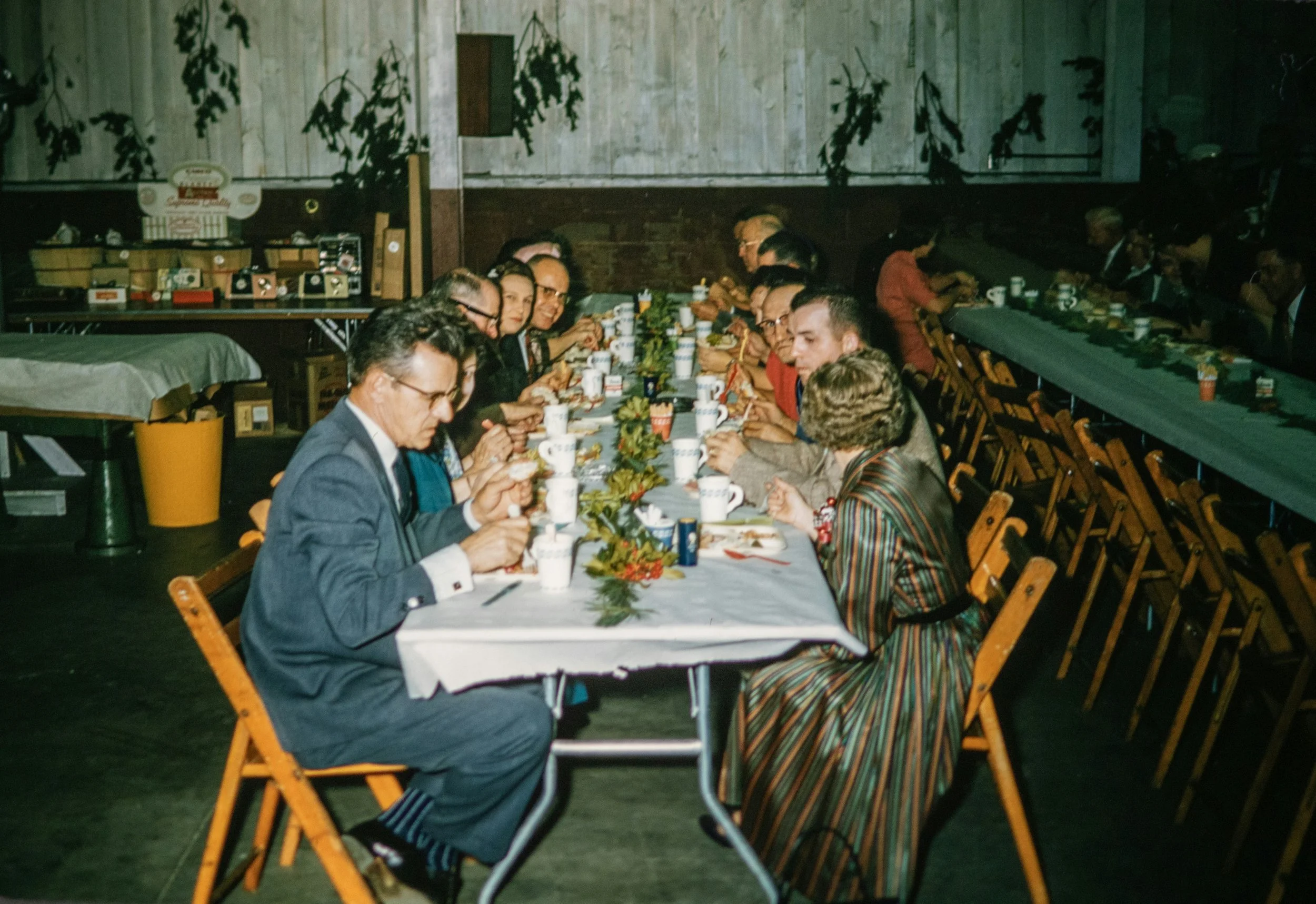
The communal spread is a signal of trust dating as far back as ancient civilisations. After the hunting and the foraging, the preparation and meal-making, humans have routinely come together to take share in sustenance. Across nations, families, tribes, traders and travellers, convene around the table, forming a social agreement that affirms safety through shared satiety. To eat together, historically, has been to belong.
Beyond the human contract of breaking bread as an act of trust, the shared meal becomes a container for each of its participants. Laden with meats and cheeses, and with fishes and loaves, the communal spread also bears the weight of private emotions from grief and gratitude to heartache and joy. These small banquets offer a distraction, allowing us to coexist without the need for immediate resolution.
A Social Oath
When the spread is set and those gathered are seated, a hierarchal etiquette begins to unfold. In a household setting, this varies across families and cultures. Who is offered the first portion, the youngest or the elder? Who is obligated to perform this rite of service? What words are spoken to signify that eating may commence? This silent choreography of meal times is a form of social attunement.
On a psychological level, this synchronicity goes further than the assigned roles of those present. As we chew, swallow, reach, and pause between mouthfuls, we settle into an invisible, grounding rhythm. Communal eating creates the social conditions that studies link to oxytocin release and contribute to social bonding. Even in the absence of conversation, the communal spread offers a quiet reassurance that we are not alone.
The Individual Plate
As modern life encourages us away from the collective and into the solitary, mealtimes have been reduced to food as function, prioritising efficiency and comfort over kinship. Whilst eating alone affords autonomy and relieves the pressures of a communal setting, it also asks us to forgo the relational benefits of a shared table.
In the assembly of small banquets, everyone has a small role to play. There is no precise measure of nutrients but an exacting amount of intention. We mark arrivals and departures, celebrate and grieve, with dishes prepared especially for the occasion. It is around the communal spread that we honour our ancestry, archiving generational exchanges through ritual and taste.
In the Steep
Through the revival of the shared meal, we allow ourselves to be re-rooted in human instinct and tradition. Self-sustenance needn’t be a selfish or solitary act; by making space for others at the table, we feed both the physical and emotional appetite of the wider collective.
5 MINUTE READ

Tee Baker is the founder and editor of The Spillbook. An MA graduate in screenwriting, her work spans cultural commentary and narrative-led digital storytelling across industries. She is the author of Bark & Ink (2020), a debut poetry anthology. Away from the page, she spends her time outdoors, often on foot or on horseback.
Behind the Pour