
The Eclipse of Enchantment
ON UNVEILING THE MOON
WORDS BY TEE BAKER
2 MINUTE READ
How long has an obsession with the moon been integral to the human experience? Long before the alleged moon landing in 1969, it has been venerated across art and culture, governed religious practices, and inspired poetry that charts the many shades of love. We express a deep devotion to this celestial body, remaining in awe throughout millenia. The pinnacle of human achievement isn’t marked by deep sea exploration or discovering new territories on earth, rather it lies in that coveted ideal of a trip to the moon.
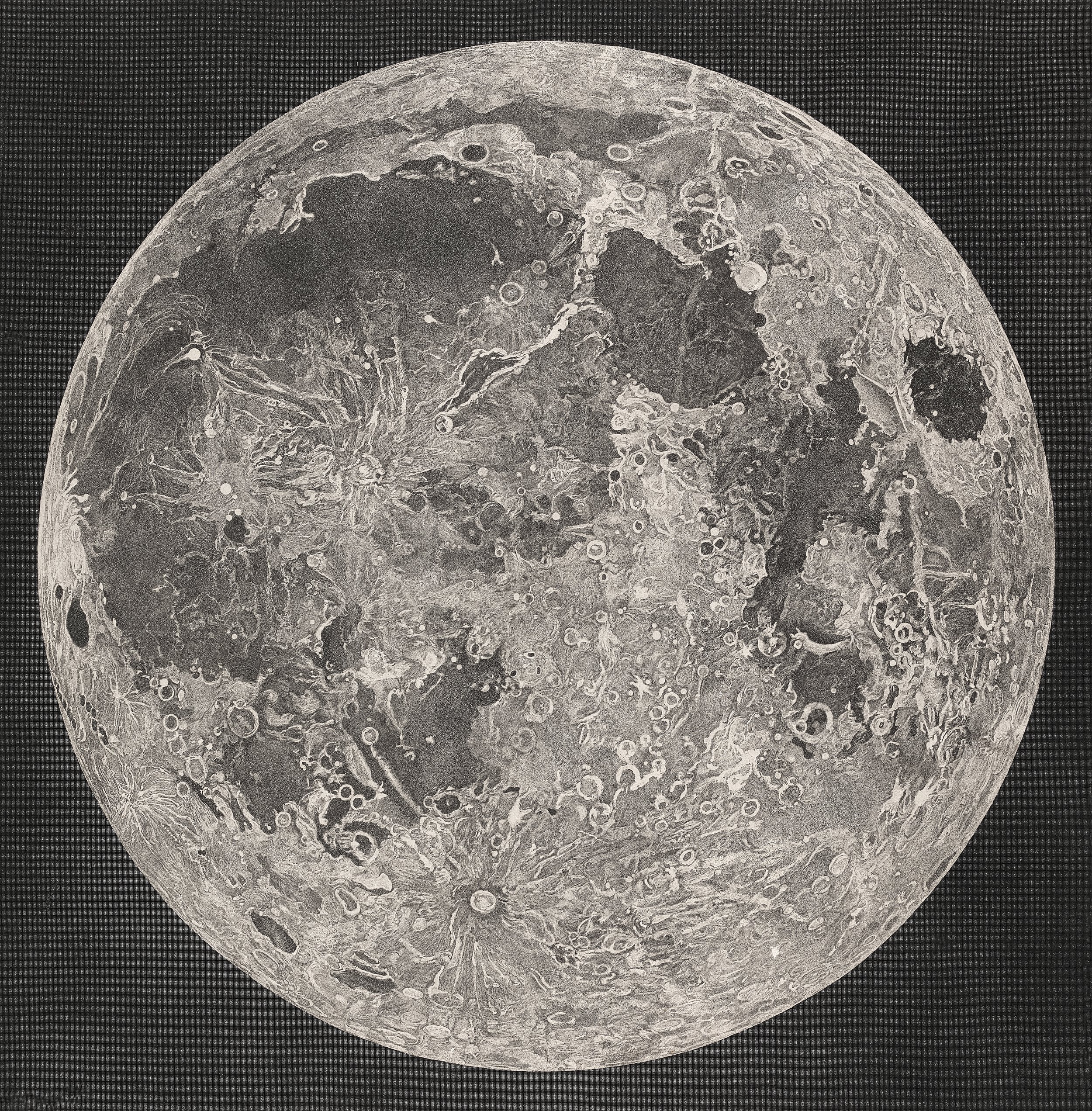
Formed largely of debris and volcanic rock, Earth’s only moon spans approximately 3,474 km in diameter, lacks a true atmosphere and holds no liquid water. In other words, it is a luminous yet arid terrain. Why then, having discovered this, are we still so intent on missions to visit an inanimate object in orbit? And is our fixation with this feat causing us to overlook the fact that the real lunar mystery is intangible, guided by invisible moon-threads determining time and tide and life’s many rhythms? Perhaps the real intrigue lies in the dual nature of the moon being both ordinary and extraordinary all at once.
Moonlore is steeped in tales tied to waxing and waning, eclipses, and blood moons. The ebb and flow of tides, sowing and harvest seasons, and the female reproductive cycle have long followed the lunar calendar. Psych ward nurses, law enforcement officers, and kindergarten teachers are near unanimous in their view that temperaments are heightened during the full moon period. Perhaps it is no coincidence, then, that Islamic teachings encourage fasting on the three White Days. In some parts of the world, timber is traditionally harvested during the waning phase, when sap is believed to retreat to the roots, making the cut wood more resistant to rot. And while modern scientific studies do not substantiate many of these claims, it is worth considering that practices so deeply embedded across various cultures and nations may well hold a deeper truth.
After the fanfare of the journey and the novelty of arrival, where would physical arrival on the moon really leave us? To what end would we remain enraptured by this dark, cold second home that lacks so severely in sustenance and diversity of flora, fauna, and terrain? Does it not stand to reason that we should be far more preoccupied with an earthbound mission when the vast majority of our planet remains unexplored? And had we been born natives to the moon, would we be just as consumed with a journey to Earth?
Perhaps the real enchantment of the moon lies in its distance. This great celestial body of grey, far flung into the cosmos, magnificently out of reach and yet unremarkable when viewed firsthand.

Tee Baker is the founder and editor of The Spillbook. An MA graduate in screenwriting, her work spans cultural commentary and narrative-led digital storytelling across industries. She is the author of Bark & Ink (2020), a debut poetry anthology. Away from the page, she spends her time outdoors, often on foot or on horseback.
Behind the Pour